Species tags in, finished anthros out
Furry AI Generator
Type a wolf character into a mainstream generator and you usually get one of two failures: a refusal from the content filter, or a human face with ears glued on and a tail that merges into the coat. Creamify's anime-family engines learned from tagged illustration archives where anthro is a first-class category, so a species tag pulls a real muzzle, believable fur direction, and a body plan that holds together from ears to tail.
The rest of the platform stays out of the way. Adult anthro work is supported rather than tolerated, everything you make lands in a private-by-default gallery, failed jobs refund themselves, and a new account starts with 40 welcome coins — no card involved at any point. Tag-aware enhancement handles the booru prompt structure when you would rather describe the character.
Render an anthro character free
Start with the species, not the story
A tag-native engine does not read your prompt as a sentence; it reads it as a stack of claims, strongest first. So the species goes at the front — anthro, rabbit girl, antlers, white fur — before a single word about armor, lighting, or mood. Put the character's biology in the opening tags and the engine commits to a muzzle and a fur pattern early. Bury it behind scene description and you get a human in a costume.
From there, specificity pays in exactly the places generic prompts fail. Name the ear shape, the tail type, the markings, whether the legs are digitigrade or plantigrade, whether the hands end in fingers or paw pads. Booru vocabulary covers all of it, because the archives these models learned from tag anthro anatomy as carefully as they tag hair color. The grammar is the same one the hentai workspace runs on — species tags are simply one more column of the vocabulary, not a special mode.
Which engines actually understand fur
Four of the anime-family engines take booru-style prompts, and they disagree with each other in useful ways. WAI Illustrious SDXL, at 5 coins, draws the cleanest line work and treats fur as linework rather than texture. Kira and Sakura, also 5 coins each, push toward saturated, poster-flat finishes that suit sticker-style characters and bold splash art. Perfect Deliberate, at 10 coins, is the one to reach for when the tag stack gets dense: long trait lists with armor, markings, and expression all specified tend to survive it intact.
The versatile row flexes toward anthro too, from prose rather than tags. Z-Image Turbo at 8 coins takes a written paragraph and returns something closer to a rendered creature than a drawn character; Wan 2.2 at 12 and Chroma1 at 15 extend the same idea with more painterly and more detailed finishes. If you already work in the anime workspace, every habit transfers directly — picking an engine here is mostly picking a finish.
Markings, muzzles, and the degrees of anthro
Furry art spans a range the models genuinely distinguish: ears-and-tail characters who are otherwise human, half-anthro faces with a short muzzle and fur along the jaw, and fully furred characters where nothing human remains but posture and hands. You steer between these with weighting. A plain muzzle tag lands mid-spectrum; weight it up and the face lengthens toward the animal; add furred body and paw tags and the human elements fall away one by one. The same dial turns the other way when a render comes back further from human than you intended.
Markings reward the same explicitness. Countershading, socks, stripes, a blaze down the snout — each is its own tag, and tagged markings survive regeneration far better than details the engine improvised on its own. If a character will appear more than once, write the markings down and keep the list. It is the cheapest character sheet you will ever maintain.
The line between anthro and animal
This category needs its boundary stated without euphemism, so here it is. Anthro characters — sapient, humanized, the fandom's entire subject — are supported, adult scenes included. Bestiality is not: content sexualizing real, non-sapient animals is excluded outright, and the moderation layer enforces that distinction rather than leaving it to interpretation. The standing platform rules apply on top — no real people and no minors, in any style, ever.
In practice the line is easy to stay on the right side of, because it is the same line the furry community drew for itself decades ago. If the character could hold up their end of a conversation, you are in supported territory.
Loading a fandom style by URL
Furry art has one of the richest fine-tune cultures of any genre, and the workspace is built to use it rather than replace it. Every SDXL-family engine here accepts a LoRA by URL: paste a link to a hosted file, and the style or character it encodes rides along on your next render — no local install, no checkpoint juggling, no GPU of your own. A style LoRA on top of WAI Illustrious keeps the clean linework while shifting the aesthetic toward whatever artist the fine-tune studied; a species LoRA can stabilize anatomy the base training saw only rarely. The community already built the library. This is the socket it plugs into.
What an evening of anthro renders costs
Money last, as it should be. A fresh account holds 40 welcome coins, with no card collected anywhere. On the 5-coin engines that is eight finished anthro renders on day one, free. When you outgrow the welcome balance, one-time packs begin at $5 for 250 coins (roughly ten cents per render at the 5-coin tier), bought when you want them, with nothing renewing behind your back.
Two defaults round out the deal. Privacy Mode sends completed renders to the device-local gallery instead of a Creamify cloud gallery; hosted systems still process the request. And when a generation fails on our end, the coins come back automatically — the meter only moves for images you actually receive.
Why Creamify is our best furry AI generator
Furry work is a model-selection problem before it is a prompt problem. Creamify curates tag-native anime engines and flexible prose engines that actually understand anthro anatomy, then adds automatic tag enhancement, community LoRA support, three editors, and a private-by-default gallery. The result is high-quality species control without maintaining a local model zoo.
| Option | Anthro understanding | Style and prompt control | Privacy | Rating |
|---|---|---|---|---|
| Creamify | Tag-trained anime plus flexible prose engines | Enhancement, weighting, LoRAs, and edits | Privacy Mode default | 5/5 — best overall |
| Mainstream general generator | Often collapses into ears-on-human output | Broad SFW styles; adult restrictions common | Varies | 2.3/5 for this use |
| Single-model furry site | Niche-aware but one visual bias | Manual prompts and rerolls | Often unclear | 2.8/5 |
| Local furry checkpoint stack | Deep after extensive curation | Powerful and maintenance-heavy | Local | 3.8/5 |
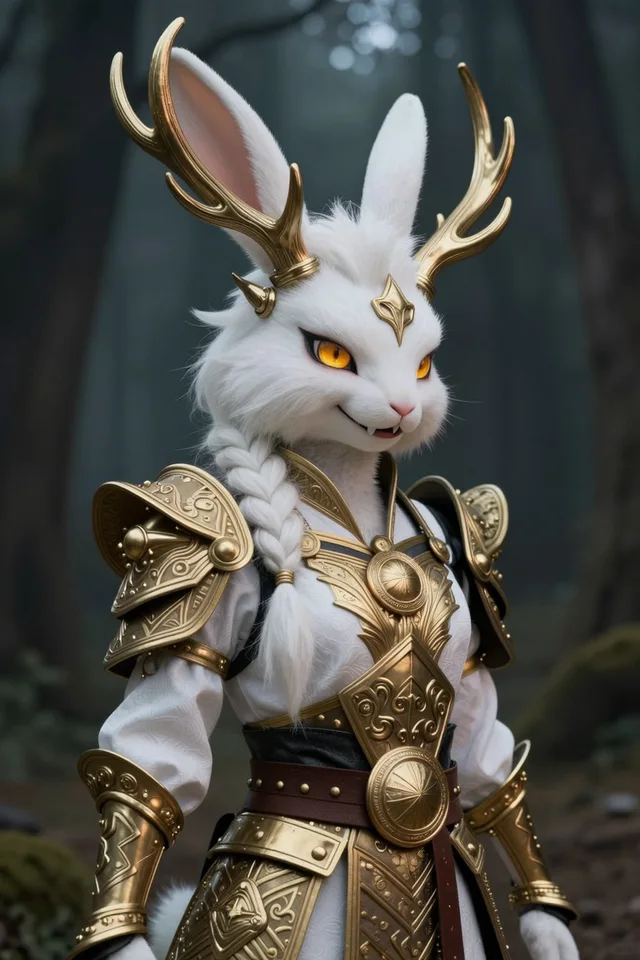
The same jackalope, engine by engine
- WAI Illustrious SDXL, 5 coins, weighted species tags
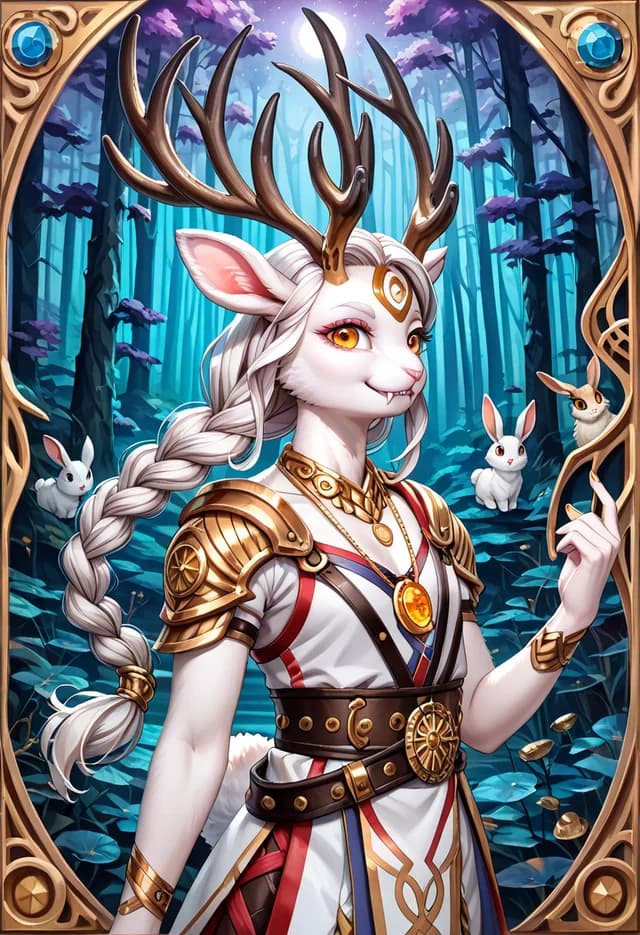
- Kira, 5 coins, the same weighted tags

What furry creators ask before starting
Yes, provided the model underneath actually saw anthro art during training. The anime-family engines here learned from booru-tagged illustration sets where species, muzzle shape, fur markings, and tail types are all labeled, so a tag list produces a coherent anthro character rather than a human with accessories. The versatile engines reach the same place from written prose instead of tags.
Start on the 5-coin tag engines: WAI Illustrious SDXL for clean line work, Kira and Sakura for vibrant flat color — and move to Perfect Deliberate at 10 coins when your trait list gets long. For a rendered, creature-feature look, the prose-driven Z-Image Turbo at 8 coins is the strongest opener, with Wan 2.2 and Chroma1 above it at 12 and 15.
Yes. A new account gets 40 welcome coins, no card required anywhere in the flow. At 5 coins per render on the cheapest engines, day one alone covers eight finished images. After that, one-time packs start at $5 for 250 coins, with no subscription attached.
Anthro and furry characters — sapient, humanized, walking upright — are fully supported, adult scenes included. Bestiality is excluded outright: nothing sexualizing real, non-sapient animals will generate, and moderation enforces that line rather than leaving it to chance. The platform-wide rules also apply — no real people and no minors, in any style.
Yes. Every SDXL-family engine accepts a LoRA by URL — paste a link to a hosted fine-tune and it applies to your next render. That covers the enormous catalog of community furry styles and species LoRAs without a local install or a GPU of your own.
Run a species tag list through a tag-native engine
Forty welcome coins cover a full evening of anthro renders before any card enters the picture.
Render an anthro character free