Built for volume and variety
AI Girl Generator
Sometimes you do not want the same character twice. You want to see what is possible — twenty faces, a dozen styles, a sense of the range before committing to anything.
That is a genuinely different task from building a consistent character, and it rewards opposite habits. Here, variety is the goal and rerolling is the tool rather than the mistake.
Generate a character free
Exploring efficiently
Start loose on purpose
Heavy specification narrows output to near-duplicates. A short prompt with two or three anchors gives the engine room to surprise you, which is the entire point of an exploration pass.
Cycle engines, not wording
Twelve engines against one prompt produces far more range than twelve rewrites against one engine. Move across the versatile, realistic, and anime families before touching your text.
Save the outliers
Keep the results that surprised you rather than only the ones that matched your expectation. Those are usually where a genuinely good direction turns up.
Under-specify first, tighten later
The instinct when starting is to describe exactly what you want. For an exploration pass this is counterproductive, because precision and variety are directly opposed — every constraint you add removes possibilities, and a sufficiently detailed prompt returns the same face with minor lighting differences no matter how many times you run it.
Two or three anchors is usually the right starting density. A rough age range, a colouring, and a setting leave enormous room while still steering. What comes back will include things you would not have thought to ask for, and that is the value of the pass.
Tighten only once something interesting appears. At that point you are no longer exploring, you are refining, and the additional constraints stop costing you anything useful.
Engines produce more variance than words do
The largest single source of variety available is the engine picker, and it is routinely underused. People rewrite a prompt a dozen times against one model when sending the original prompt to a different family would have shown them more in two generations.
The three families behave distinctly enough that the same words produce genuinely different people. Versatile engines interpret loosely and flex across looks. Realistic engines push toward photographic plausibility and specific lighting behaviour. Anime engines reinterpret the description entirely as illustration.
Style presets add a second axis on top of that. Base, realistic, anime, illustration, and painting apply across whichever engine you have selected, so the combination space is considerably larger than the model list alone suggests.
Knowing when to stop exploring
Exploration has a natural end point, and recognising it saves coins. Once you have a result that is close enough that you are thinking about specific changes rather than general direction, further generation is wasted — you are now trying to reproduce something, and generation does not reproduce.
That is the moment to switch tools. A prompt-guided edit against the result you liked will change the one thing you want changed and leave the face intact, which repeated generation cannot do at any coin budget.
If the character is worth keeping beyond a single image, New Avatar and the edit-forward workflow are the right destination, and the girlfriend generator page covers that sequence properly. Exploration finds the character; a different process keeps her.
It is also worth recognising when exploration was never the right mode. If you started with a specific person already in mind — a face you can picture clearly, down to particular features — then generating broadly is the slow route to disappointment, because you are sampling randomly and hoping to land on something you could have built deliberately. Go straight to guided avatar creation instead. Exploration earns its cost when you genuinely do not yet know what you are looking for.
Why Creamify gives exploration somewhere to go
The platform advantage appears after the first good face. Creamify moves that keeper into instruction editing, scene composition, upscaling, or video without changing accounts or rebuilding the prompt. Twelve curated image engines make discovery wide; prompt enhancement and tested defaults make it approachable; Privacy Mode makes device-local results the starting posture.
Six faces, six engines
- Versatile I
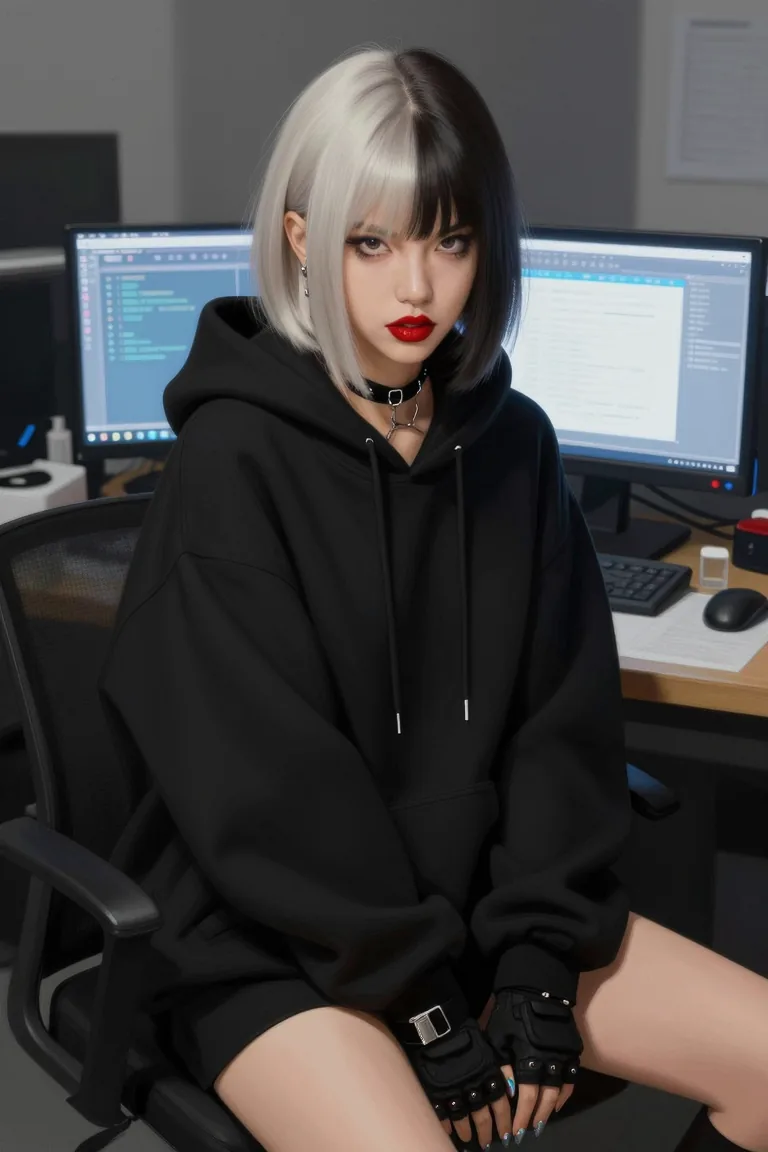
- Versatile II

- Versatile III
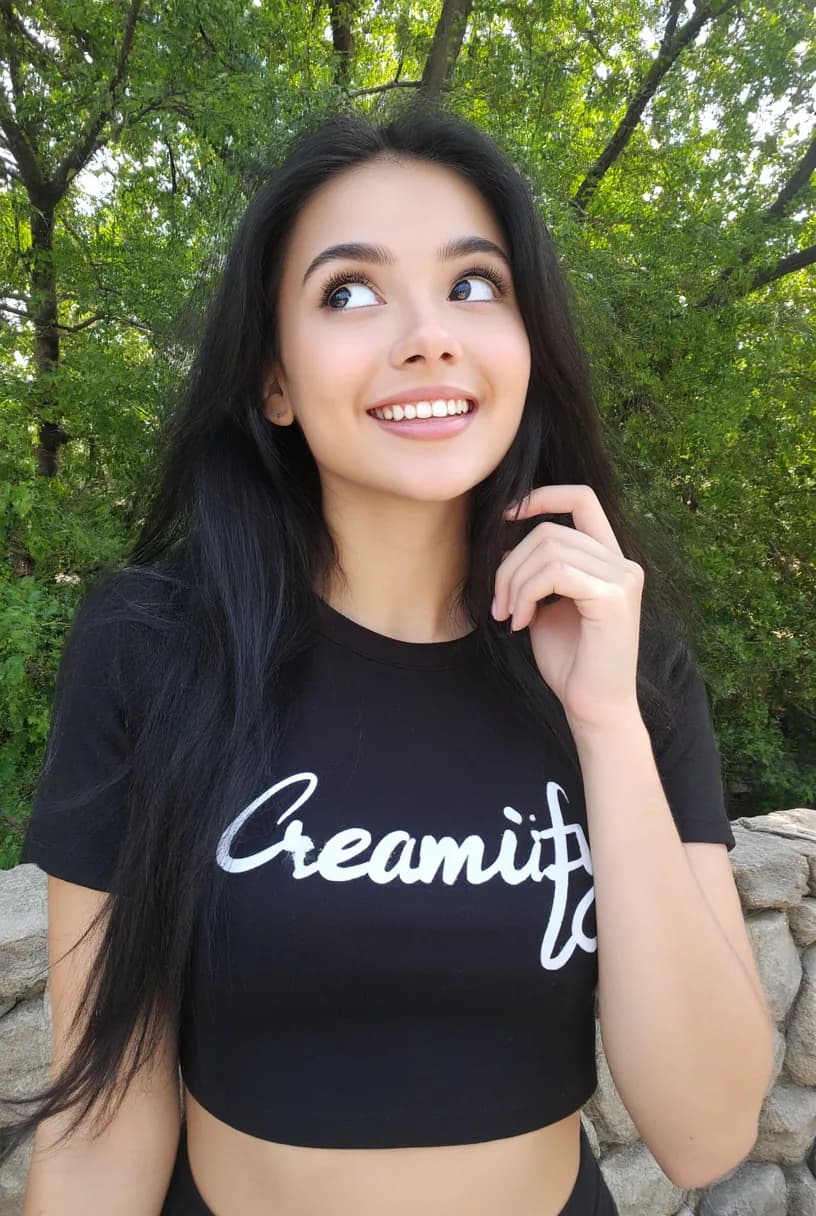
- Realistic II

- Realistic III
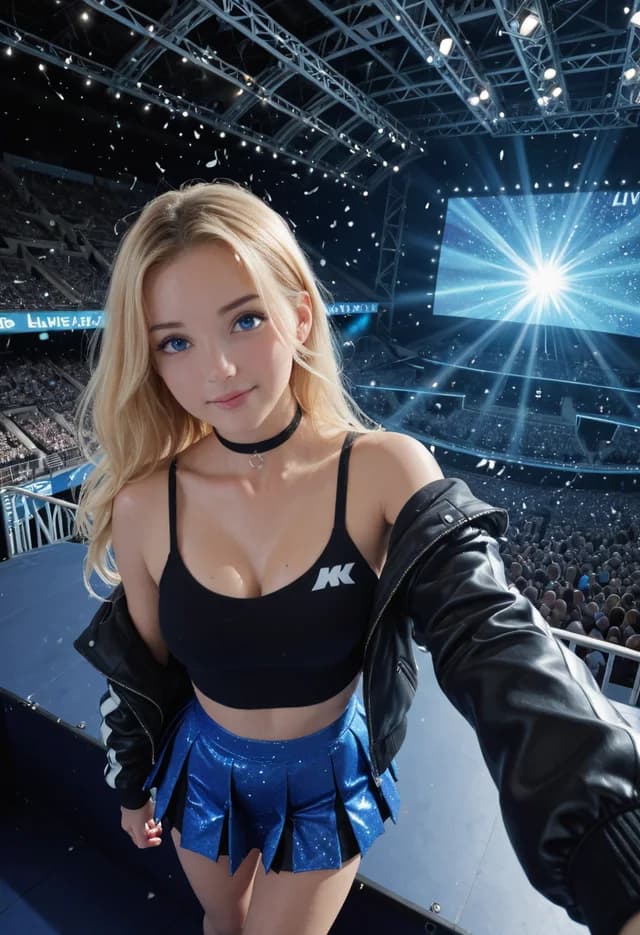
What actually widens the range
Twelve engines against one prompt
The engine picker is the largest untapped source of variety in the workspace. Identical text sent to Realistic I and Anime II returns two unrelated people, which no amount of rewriting on a single model will reproduce.
Five style families on top
Base, realistic, anime, illustration, and painting apply across whichever engine is selected. The combination space is considerably larger than the model list alone suggests, and switching costs one control rather than a rewrite.
Framing changes who appears
Aspect ratio is not just a crop. A portrait ratio biases toward head and shoulders and a landscape one toward environment and full figure, and the model composes differently for each — often producing a different kind of person entirely.
Nothing kept unless you ask
Privacy Mode is the default, so an exploration pass that produces forty discarded faces are not added to a Creamify cloud gallery. Cloud sync is there if you want it and is opt-in.
Getting more range out of it
Opposite goals. This page is about breadth — many different faces, quickly, to find directions worth pursuing. The girlfriend generator is about holding one character steady across many images, which needs a reference image and edit-forward workflow rather than repeated generation. Most people use this one first and that one second.
Almost always over-specification. Every additional constraint shrinks the space of matching outputs, so a prompt with fifteen physical descriptors returns fifteen near-identical faces by design. Cut back to two or three anchors and let the engine fill the rest, then tighten once you see a direction you like.
Hold the prompt constant and change the engine. The difference between Realistic I and Anime II on identical text is far larger than anything you can achieve by rewriting the text on one engine, and it costs less than iterating blindly.
Broad attributes — hair, colouring, build, styling, age range within adult bounds — respond well. Very precise facial geometry does not, because text describes a category rather than an individual. If you need exact features repeatedly, generate once and edit forward from that result instead.
Only what the platform-wide rules refuse: illegal content and content that violates our content rules never renders. Everything else about her design, from styling to setting to tone, is open to direct.
Costs are per generation and vary by engine, with the figure shown before you run anything. New accounts start with 40 coins on day one, which comfortably covers a wide first sweep across several engines and styles.
See how far one prompt can travel
Twelve engines and five style families mean a single description has a lot more range than most people expect.
Generate a character free