Proportion control that sticks
AI Big Boobs
Body type is one of the least reliable things to control through text. Ask ten engines for the same proportions and you will get ten interpretations, several of which quietly regress toward whatever the training data considered average.
It is controllable, but it takes specific habits: structural description rather than adjectives, engines that were not narrowly tuned, and editing instead of rerolling once something lands.
Generate privately with 40 coins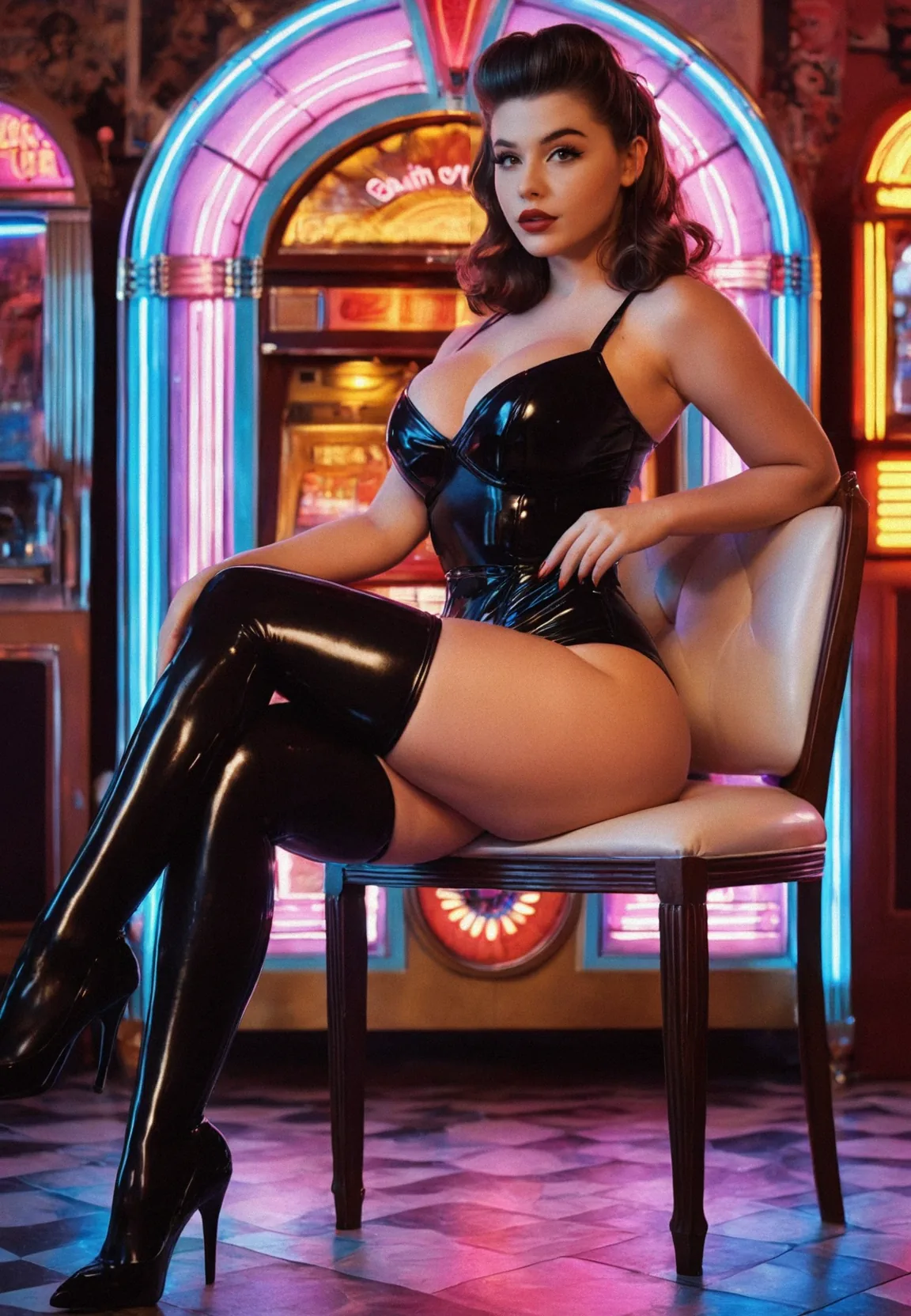
Describing a body so the model listens
Describe structure, not intensity
Adjectives stacked for emphasis tend to produce distortion rather than scale. Describing proportion in relation to frame and posture gives the model something coherent to render.
Give the body a pose and a garment
Proportion reads through context. How clothing falls and how weight sits in a pose communicate build far more reliably than describing size in isolation.
Lock it in with an edit
Once a result has the proportions you wanted, stop generating. Body descriptors are among the first things to shift on a reroll; edits preserve them.
Structure describes a body better than adjectives
The default approach is to reach for intensifiers, and it is the main reason body prompting disappoints. Intensity words tell a model to push geometry, not to render a coherent figure at a particular scale, and pushed geometry is how you end up with results that are technically responsive and anatomically wrong.
Structural description works better. Proportion relative to frame, how weight distributes in a given posture, where the silhouette changes direction — these are things the model has seen consistently in training and can render as a whole figure rather than as one exaggerated component.
Emphasis syntax is the correct tool for insistence. Weighting a single accurate descriptor upward raises its priority without adding competing terms, which is precisely what stacking synonyms fails to do. One weighted term beats three unweighted ones nearly every time.
Context communicates build
The most effective body-type instruction in a prompt is frequently not a body descriptor at all. Clothing does enormous work: how a garment strains, where it folds, how a neckline or waistband sits all imply build far more concretely than direct description, because the model learned those relationships from photographs where they were always consistent.
Pose does the same job from another direction. Weight distribution, how a figure leans, what contacts a surface — all of it carries proportion information. Reclining, seated, and standing poses each reveal build differently, and choosing one deliberately gives the model a coherent problem to solve.
Lighting is the third lever. Directional light produces shadow that describes form; flat illumination flattens it. A figure lit from the side reads as three-dimensional at any proportion, while the same figure under even light reads as an illustration of one.
Why proportion drifts, and what stops it
Body attributes are among the least stable things across generations. Two runs of an identical prompt will vary more in build than in hair colour or setting, because proportion sits closer to the model's learned average and gets pulled back toward it by default.
This makes rerolling actively counterproductive once you have something right. Each new sample re-rolls the body along with everything else, and the odds of landing on your proportions again are no better than they were the first time.
Editing is the answer, as it is for faces. A prompt-guided edit changes what you name and preserves what you do not, so a figure whose build you approve of can be moved through outfits, poses, and settings without that build being re-decided each time. For anything intended as a set rather than a single image, that switch — from generating to editing — is the whole technique.
Why Creamify holds body direction better
Body control improves when the platform gives you more than rerolls. Creamify offers twelve curated image engines, editable weighting and negatives where they help, and three instruction editors for preserving a keeper. Optional enhancement structures the prompt, while Privacy Mode keeps completed work out of a Creamify cloud gallery unless you choose sync.
Proportion held across engines
- Realistic III

- Versatile I

- Realistic I

- Realistic II

- Anime II
- Realistic IV

Where body prompting usually fails
Emphasis syntax beats adjective stacking
Weighting one accurate descriptor upward is more effective than piling on three synonyms, which compete for attention and frequently produce anatomical distortion rather than scale.
Clothing carries proportion
How a garment strains, drapes, and folds tells the model more about build than direct description does. A described outfit is often the most effective body-type instruction in a prompt.
Engines differ substantially
Some models regress hard toward an average build regardless of prompting. The versatile family and Realistic II and III hold specified proportion more consistently than narrowly tuned alternatives.
Drift is worst on rerolls
Body descriptors are among the least stable attributes across generations. Anything you want to keep should be preserved through editing rather than re-requested.
Body-type prompting, answered
Usually because they are competing with too much else. Body descriptors are weak signals relative to pose, setting, and lighting, so in a long prompt they get crowded out. Move them early, use emphasis syntax on the one term that matters most, and cut unrelated description. If it still regresses, the engine is the problem rather than the wording.
Because the model reads intensity as an instruction to exaggerate geometry, not to scale it coherently. Three synonyms for the same attribute do not reinforce each other — they compound, and the result is usually anatomy that no longer holds together. One well-weighted descriptor consistently outperforms three unweighted ones.
Versatile I through III and Realistic II and III are the most responsive. Models tuned narrowly on a single aesthetic tend to normalise toward it regardless of prompting. If a specified build keeps regressing on one engine, try the same prompt elsewhere before rewriting it.
Do not regenerate. Body attributes are among the first things to drift between samples, even with identical prompts. Take the result that had the proportions you wanted and run prompt-guided edits against it — changing outfit, pose, or setting while the body stays fixed.
Yes, and often more predictably, since anime models were trained on tagged data where body-type tags are explicit and consistently applied. Tag-style prompting works better there than prose, as covered on the hentai generator page.
The platform's content rules apply: illegal content and content that violates our content rules are blocked at the moderation gate. Body type itself is never the restricted part; proportion prompts inside the rules render without a taste filter.
Test whether the proportion survives a second image
Body descriptors are among the first things to drift on a reroll. Editing forward is what keeps them.
Generate privately with 40 coins